
"coffee global spread"
800 article(s) found
Global Coffee Development and spread-the original intention of the birth of "five sad Coffee" in Chinese Cafe
Hougu Coffee, as the largest coffee enterprise in China, has established stable trade relations with more than 40 countries and regions around the world. In recent years, while expanding and strengthening international trade, Hougu is deeply aware of the insufficient cultivation of the domestic market and the urgent need to strengthen the cultivation and promotion of Chinese coffee culture. As the first Chinese cafe in the world, Wubai Coffee is essential to settle down.

Research says wild coffee beans will become extinct in the future if global warming continues
The threat to coffee trees is becoming more and more serious, and upheaval may follow. In the coming decades, coffee bean production is likely to move from the equator to the mountains, leading to deforestation. In addition, in addition to rising temperatures, climate change may also lead to the spread of fungi, which in turn destroys coffee trees. In 2012, abnormal high temperatures and rainfall occurred in Central America, and coffee leaf rust then attacked coffee trees.

Chinese people should have their own coffee culture.
In the environment of economic globalization, all countries have given the green light in addition to trade and business, which inevitably has the spread and infiltration of culture, and the western coffee culture has also spread in China. In the past, drinking coffee was a Western culture, but now it belongs to the global culture, and each region has its own unique characteristics. Take Roebach latte, for example, it has established its own brand.

Starbucks formulates global expansion plan to open 2400 new stores in two years
Starbucks, a coffee shop chain based in Seattle, has made plans for global expansion and will open 2400 new stores worldwide in the next two years, bringing the total number of chain stores to more than 20000, the Los Angeles Times reported. Chain stores will spread across six continents. The CEO of Starbucks announced at the company's biennial investor conference on Wednesday.

Research says wild coffee beans will become extinct in the future if global warming continues
[global Science and Technology Comprehensive report] according to a report by Singapore's Lianhe Zaobao on September 4, the Australian Climate Research Institute pointed out in a newly released research report that if global warming continues on the current trajectory, wild coffee beans could become extinct by 2080. According to reports, researchers say that due to rising temperatures and rampant pests and fungi, it is estimated that the number of farmland suitable for growing coffee trees worldwide will decrease by 2050.

Global Coffee producing area-Philippine Coffee Market
Coffee was introduced into the Philippines (Philippines) in the early 19th century and by 1880 the country had become the fourth largest coffee exporter in the world. However, due to the spread of coffee rust, the country became a coffee importer soon after 1880. However, the coffee growing industry has gradually recovered. Coffee production in the Philippines: the Philippines is one of the few countries that can grow four varieties of coffee.

The global market for coffee and health is changing
Today, not only is the global market of the coffee industry changing, but also the concept of health contained in coffee culture has been spread more widely. For a long time, people have known that coffee can be refreshing, so drinking coffee has become popular all over the world as a way of life. Recently, American scientists have found that in addition to being refreshing, coffee contains high levels of polyphenols (Pol).

History of coffee origin and spread of coffee grounds art
The Arabs failed to spread coffee in Asia, but the Dutch did! During their colonization, they planted coffee in Malabar, India, and brought coffee to Batavia, Java, Indonesia, in 1699. The Dutch colonies were once the main suppliers of coffee to Europe. Indonesia is currently the fourth largest coffee exporter in the world.

The historical origin and spread of coffee
Coffee into Asia the Arabs failed to spread coffee in Asia, but the Dutch did! In the process of colonization, they grew coffee in Malaba, India, and brought it to Batavia in what is now Java, Indonesia, in 1699. The Dutch colonies once became the main supplier of coffee in Europe. At present, Indonesia is the fourth largest coffee export in the world.
Cross-strait coffee gives you 5 minutes to understand the origin of coffee.
There are all kinds of legends about the origin of coffee, but most of them are forgotten because of its absurdity. People will not forget that Africa is the hometown of coffee. Coffee trees are likely to be found in Ethiopia's KAFFA province. Later, batches of slaves were sold from Africa to Yemen and the Arabian Peninsula, and coffee was taken everywhere along the way. That's for sure.
Global coffee producing area-Philippines
Coffee was introduced into the Philippines (Philippines) in the early 19th century and by 1880 the country had become the fourth largest coffee exporter in the world. However, due to the spread of coffee rust, the country became a coffee importer soon after 1880. However, the coffee growing industry has gradually recovered. Coffee production in the Philippines: the Philippines is one of the few countries that can grow four varieties of coffee.

Coffee spreads all over the world
Coffee cultivation began in the 15th century. For hundreds of years, Yemen in the Arabian Peninsula is the only coffee producer in the world, and the market demand for coffee is very strong.
Development of Coffee Culture in China
In the process of globalization, Western culture has also spread in China. Take coffee culture as an example. In the earliest days, drinking coffee was a western culture, but now it is already a global culture, but each region still has its own unique characteristics. Take espresso, for example, it has established its own brand and formed its own unique coffee culture in China.

History of coffee origin and spread
The Arabs failed to spread coffee in Asia, but the Dutch did! During their colonization, they planted coffee in Malabar, India, and brought coffee to Batavia, Java, Indonesia, in 1699. The Dutch colonies were once the main suppliers of coffee to Europe. Indonesia is currently the fourth largest coffee exporter in the world.
The coffee culture of the Greater Chinese
In the process of globalization, Western culture has also spread in China. Take coffee culture as an example. In the earliest days, drinking coffee was a western culture, but now it is already a global culture, but each region still has its own unique characteristics. Take espresso, for example, it has established its own brand and formed its own unique coffee culture in China.

Introduction to the History of how Coffee spread to the World
According to historical records, coffee was first planted in Taiwan in 1884, which opened the prelude to the development of coffee in China. The earliest coffee cultivation in the mainland began in Yunnan, when a French missionary brought the first coffee seedlings to Binchuan County in Yunnan Province at the beginning of the 20th century. In the following nearly a hundred years, coffee was only planted in the vast territory of China. Of course
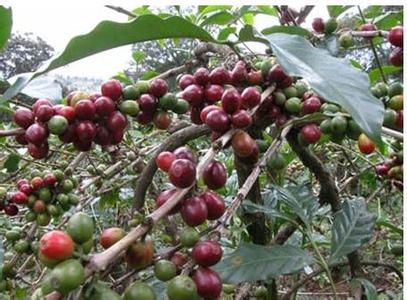
Research says wild coffee beans will become extinct in the future if global warming continues
According to reports, researchers say that due to rising temperatures and rampant pests and fungi, it is estimated that the number of farmland suitable for growing coffee trees will be halved by 2050. Once the coffee trees disappear, it is bound to have a severe impact on the 120 million people around the world who depend on coffee beans for their livelihood, many of whom live in the world's poorest countries. At present, coffee beans are produced in 70 countries in the world, and coffee industry is one of them.

Brazilian coffee frost frost recovery and yield fluctuation of Brazilian coffee trees
With the development of new technology, the news of Brazilian coffee cream spread all over the world in a few minutes. Accordingly, coffee prices usually rise due to expectations of a global coffee shortage. Brazil produces nearly 25 million bags of 60 kilograms of coffee. This accounts for about 25% of the world's supply. Frost has a far-reaching effect because it can reduce or completely eliminate most of the world's supplies in one day.

The historical origin and spread of coffee
Coffee enters Europe Venice merchants first brought coffee to Europe in 1615. By 1683, Europe's first coffee shop opened in Venice, and the most famous was the Floran Cafe, which opened in St. Mark's Square in 1720.

The historical origin and spread of coffee
Coffee into Asia the Arabs failed to spread coffee in Asia, but the Dutch did! In the process of colonization, they grew coffee in Malaba, India, and brought it to Batavia in what is now Java, Indonesia, in 1699. The Dutch colonies once became the main supplier of coffee in Europe. At present, Indonesia is the fourth largest coffee export in the world.